
The Struggle for Peru’s Independence
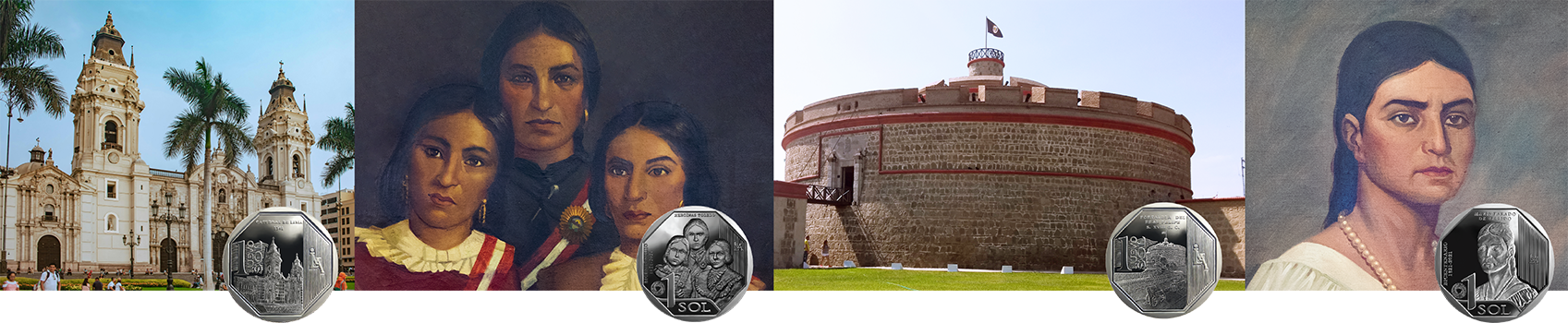
The abdication of King Charles IV and the subsequent deposition of Ferdinand VII in 1808 sparked independence movements across Spain’s South American colonies.
In Peru, these ideas had been preceded by major rebellions such as that of Juan Santos Atahualpa, who proclaimed himself Inca in 1742, and especially Túpac Amaru II, a descendant of the last Inca, whose uprising between 1780 and 1783 shook the colony and continued even after his execution in 1781.
In the early 19th century, local independence movements led by indigenous people and Creoles (Spaniards born in the Americas) emerged in Peru, but were swiftly suppressed by the Spanish authorities in Lima. Unlike most other Spanish colonies, Peru remained the main stronghold of Spanish power in South America and the base for counter-revolutionary forces.
Nevertheless, in 1820, General José de San Martín (1778–1850), after liberating Argentina and Chile, landed on the Peruvian coast with the Liberating Army. San Martín defeated the colonial forces, forcing the Spanish authorities to abandon Lima and retreat to the interior.
On 28 July 1821, he entered the capital and proclaimed Peru’s Independence. In 1822 he handed over control to Simón Bolívar (1783–1830), who had already liberated Venezuela, Colombia, and Ecuador. Complete independence was finally achieved in 1824 with the decisive victories of Bolívar and his lieutenant Antonio José de Sucre at the battles of Junín and Ayacucho.